Palladium
Palladium Network: Legal and Regulatory Perspectives on Decentralized Arbitration
Introduction
Palladium Network (PLLD) is an ERC-20 token operating on the Ethereum blockchain, built to converge tangible real estate value with high-frequency arbitrage strategies. By tokenizing select properties and channeling a portion of arbitrage profits into buybacks of Palladium's native token (PLLD), the platform provides both tangible asset security and liquidity advantages. This litepaper outlines the tokenization models, buyback mechanisms, vesting schedules, and the architectural foundations designed to democratize premium real estate ownership while incentivizing rational market behavior. Palladium converges tangible real estate value with high-frequency arbitrage to produce a more stable and transparent blockchain environment. Through fractional NFTs, investors gain direct access to income-generating properties, while arbitrage-driven buybacks anchor PLLD's market performance.
Decentralized arbitrage, facilitated by platforms like the Palladium Network, is a promising innovation in the decentralized finance (DeFi) landscape. However, this activity operates in a legal and regulatory gray area, raising important questions about legality, liability, and compliance. This article examines the legal and regulatory perspectives surrounding decentralized arbitrage, focusing on the Palladium Network and its implications for participants.
How Palladium's Hybrid Model Works
1. Real Estate–Backed NFTs
Traditional real estate investment often requires significant capital, legal hurdles, and long holding periods. Palladium solves this by tokenizing property fractions into NFTs.
For example, its first property—a scenic mountain cottage near a ski resort—is being tokenized and offered to the community. Investors don't need millions to own a luxury property; instead, they can purchase fractional NFTs that represent their share.
Each NFT is tied to a real-world, income-generating property, ensuring that investors benefit not only from property appreciation but also from rental income and ecosystem rewards.
2. Automated Arbitrage Engine
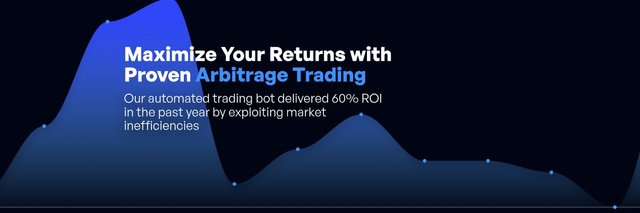
Crypto markets are known for price inefficiencies across exchanges. Palladium leverages this by deploying a high-frequency arbitrage engine that scans and exploits price gaps.
Here's the key part: a portion of profits from arbitrage is used to buy back PLLD tokens from the market. This constant buyback mechanism reduces circulating supply, anchors token value, and incentivizes long-term holding.
3. Buyback and Burn Mechanism
To further stabilize the ecosystem, Palladium channels arbitrage profits into buybacks of PLLD. Some of these tokens are burned, while others are redistributed to loyal community members through rewards and staking pools.
This system reduces volatility while rewarding long-term holders—creating a win-win environment for both investors and the token economy.
The Evolving Legal and Regulatory Landscape
The legal and regulatory landscape for DeFi, including decentralized arbitration, remains evolving and uncertain. Many jurisdictions are still grappling with how to classify and regulate digital assets, DeFi platforms, and related activities. As a result, there is no comprehensive and harmonized legal framework governing decentralized arbitration globally.
Legal and Regulatory Challenges
- Asset Classification: Classifying digital assets, such as the real estate tokens used on the Palladium Network, is a major legal challenge. Depending on the jurisdiction, these tokens may be classified as securities, commodities, currencies, or other types of assets. This classification has significant implications for regulation, compliance obligations, and investor protection.
- Jurisdiction: Decentralized arbitration often involves participants located in multiple jurisdictions, making it difficult to determine which law and apply courts.
- Liability: Decentralized arbitration raises questions about liability, particularly in the event of errors, fraud, or losses. It can be difficult to determine who is responsible for these losses and how to enforce liability.
- Compliance: DeFi platforms and arbitrage participants must comply with various laws and regulations, such as anti-money laundering (AML) laws, know-your-customer (KYC) laws, and securities laws. However, complying with these laws in a decentralized and borderless space can be challenging.
- Governance: DeFi platforms often have decentralized governance structures, making it difficult to determine who is responsible for decision-making and compliance.
Regulatory Perspectives in Various Jurisdictions
- United States: The Securities and Exchange Commission (SEC) has taken a tough stance against digital assets, particularly those deemed securities. The SEC has filed enforcement actions against DeFi platforms and token issuers that fail to register their offerings or comply with securities laws.
- Europe: The European Union is developing a comprehensive regulatory framework for digital assets, called the Markets in Cryptoassets Regulation (MiCA). MiCA will provide clarity on the classification, regulation, and compliance obligations of digital assets and DeFi platforms.
- Asia: Asian jurisdictions have adopted varying approaches to digital asset regulation. Some jurisdictions, such as Singapore and Hong Kong, have adopted a more welcoming approach, while others, such as China, have imposed strict bans.
Legal Implications for Decentralized Arbitration on the Palladium Network
- Compliance with Securities Laws: The Palladium Network must ensure that its real estate tokens comply with applicable securities laws. This may involve registering the token with the appropriate regulator or obtaining an exemption from registration requirements.
- AML/KYC Compliance: The Palladium Network must implement robust AML/KYC procedures to prevent money laundering and terrorist financing. This may involve verifying user identities, monitoring transactions for suspicious activity, and reporting suspicious activity to authorities.
- Investor Protection: The Palladium Network must take steps to protect investors from fraud and loss. This may include disclosing the risks associated with investing in real estate tokens, providing accurate and complete information, and implementing dispute resolution mechanisms.
- Governance: The Palladium Network must have a clear and transparent governance structure that outlines the responsibilities of different stakeholders. This should include mechanisms for decision-making, risk management, and compliance.
Legal Considerations for Arbitration Participants
- Understanding the Risks: Arbitration participants must understand the legal and regulatory risks associated with this activity. This includes the risk of violating securities laws, AML/KYC laws, and other regulations.
- Consultation with Legal Counsel: Arbitration participants should consult with legal counsel to ensure that they comply with all applicable laws and regulations.
- Due Diligence: Arbitration participants must conduct due diligence on the DeFi platform and the assets they trade. This includes examining the platform's legality, smart contract security, and information accuracy.
- Risk Management: Arbitration participants must implement risk management strategies to mitigate potential losses. This may involve diversification, hedging, and the use of stop-loss orders.
Recommendation
- Regulatory Clarity: Regulators must provide clarity on the regulation of digital assets and DeFi platforms. This will help reduce uncertainty and encourage innovation.
- Harmonization: Jurisdictions should strive to harmonize digital asset regulations. This will reduce compliance costs and facilitate cross-border trade.
- Innovation: Regulators must support innovation in the DeFi space. This can be done by creating regulatory sandboxes and providing guidance to DeFi platforms.
- Education: Regulators and DeFi platforms must educate investors about the risks and benefits of investing in digital assets.
- Collaboration: Regulators, DeFi platforms, and industry participants must collaborate to develop best practices for decentralized arbitrage.
Tokenomics
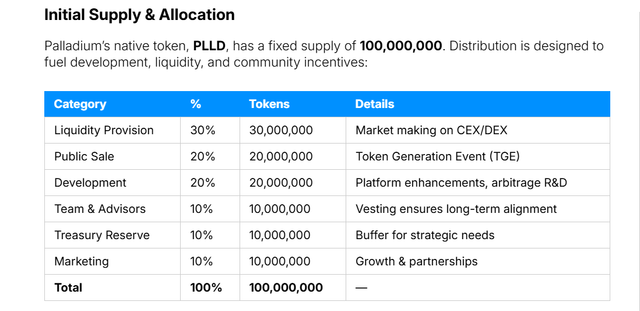
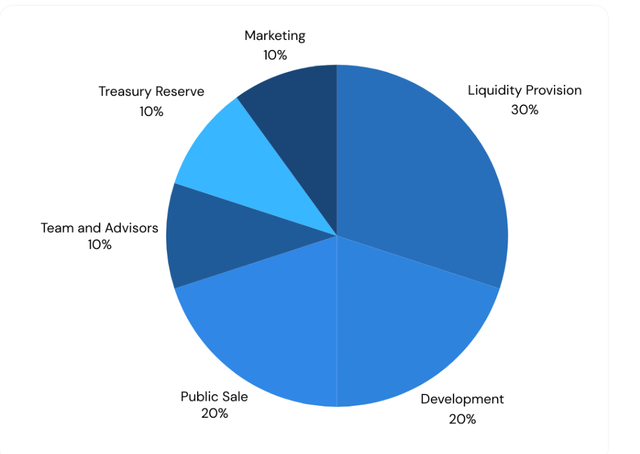
Palladium's native token, PLLD, has a fixed supply of 100,000,000. Distribution is designed to fuel development, liquidity, and community incentives:
- Liquidity Provision - 30%- 30,000,000- Market making on CEX/DEX
- Public Sale - 20%- 20,000,000- Token Generation Event (TGE)
- Development - 20%- 20,000,000- Platform enhancements, arbitrage R&D
- Team & Advisors - 10%- 10,000,000- Vesting ensures long-term alignment
- Treasury Reserve - 10%- 10,000,000- Buffer for strategic needs
- Marketing - 10%- 10,000,000- Growth & partnerships
Vesting Schedules
Development (20%)
- Lockup: 6 months post-TGE
- Vesting: Gradual release from Month 7 onward, aligning with platform milestones (eg, Swap launch, real estate tokenization).
Team & Advisors (10%)
- Lockup: 6 months post-TGE
- Vesting: Linear over 25 months to maintain focus on long-term success.
Treasury Reserve (10%)
- Lockup: 12 months post-TGE
- Vesting: Linear release, offering flexibility for unforeseen requirements and strategic expansion.
Marketing (10%)
- Lockup: None
- Vesting: 25% released at TGE, remaining 75% over the next 12 months to support sustained growth and user acquisition.
These schedules prevent sudden token floods, safeguarding market stability and incentivizing ongoing project development.
Buyback Mechanism
Central to Palladium's sustainability is a profit-sharing buyback system, where a portion of PLLD's arbitrage returns fund repurchases:
- Arbitrage Earnings: Profits generated from market inefficiencies are channeled into the buyback pool.
- Periodic Token Buys: At random intervals, Palladium buys PLLD on the open market to thwart predictable front-running and speculation.
- Supply Reduction: Tokens are transferred to the treasury or retired, potentially effectively shrinking circulating supply and supporting the token's market value.
Transparent Reporting" Quarterly disclosures detail total tokens repurchased, expenditure, and transaction references for on-chain or exchange verification.
Roadmap
Phase 1 (0–6 Months)
- Expand arbitrage coverage to multiple exchanges
- Conduct buybacks from initial trading profits
- Complete preliminary audits
Phase 2 (6–12 Months)
- Launch PLLD Swap
- Roll out first fractional real estate NFTs
- Integrate advanced arbitrage (options, futures)
Phase 3 (12+ Months)
- Diversify global property portfolio
- Implement AI-based arbitrage modules
- Maintain ongoing buybacks and periodic vesting updates
Conclusion
Decentralized arbitration offers promising opportunities, but also poses significant legal and regulatory challenges. The Palladium Network and arbitration participants must be aware of these challenges and take steps to ensure compliance and mitigate risks. As the legal and regulatory landscape evolves, it is crucial to stay informed and seek legal advice to navigate the complexities of this evolving field.
Stay connected with us:
- Website: https://plld.net/
- Twitter: https://x.com/DDTechGroup
- Telegram: https://t.me/Palladium_PLLD
- Whitepaper: https://plld.net/whitepaper
- View PLLD on CoinGecko: https://www.coingecko.com/en/coins/palladium-network
- Forum Username: Mojokertos
- Forum Profile Link: https://bitcointalk.org/index.php?action=profile;u=3166146


Komentar
Posting Komentar